How Letter Recognition Grows in Early Childhood
It’s a quiet Tuesday afternoon. Emma, who just turned five, sits at the kitchen table with a sheet full of colourful dots. Her small fingers grip a dabber as she marks the letter 'B' over and over. It’s a little game, but what she’s doing is a huge step in her learning journey—recognising letters isn’t just about reading; it’s about connecting symbols to sounds and meaning.
Letter recognition is one of those milestones that feels invisible until one day, it clicks. At around ages 4 to 6, many children begin to identify individual letters of the alphabet without adult prompting. This early awareness lays the foundation for reading, writing, and spelling. But the exact timing varies widely—some kids recognise a few letters at age 3, others not until nearly 7. That variation is perfectly normal.
What Letter Recognition Really Means
Recognising a letter means more than just naming it aloud. It means a child can spot the letter in different fonts, know the letter’s name, and eventually connect it to its sound. For example, when a child sees 'C' in a book and remembers its name and the /k/ sound, they’re building the essential patterns they'll use to decode words. This process can take months or years, starting with just a few familiar letters and slowly expanding.
It's common for children to start with letters in their own name and other personal words they hear often. This personal connection gives real motivation. Watching a toddler point with glee at the letter 'M' on their tea mug might seem small but indicates an important spark of recognition.
How Parents and Teachers Can Support Letter Learning
- Use activities that combine play with letter exposure, like baking cookies shaped in letters or playing alphabet bingo.
- Focus on repetition and familiarity—seeing the same letter in books, signs, and worksheets multiple times helps cement memory.
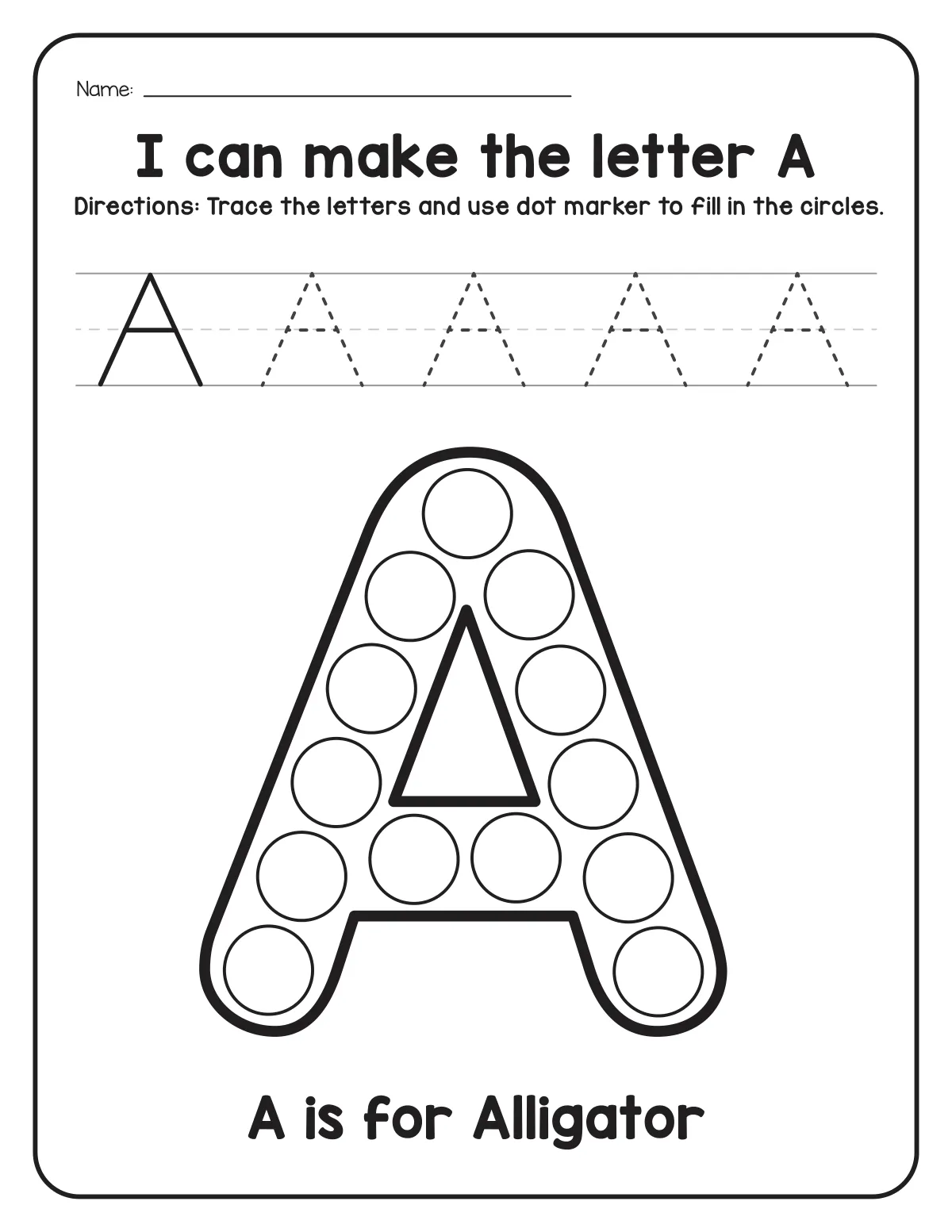
- Encourage multisensory engagement: tracing letters with fingers, stamping with dot markers, or building letters with blocks.
- Celebrate progress quietly—don’t pressure the child to ‘know all letters now.’ Instead, watch for moments of recognition and praise effort.
One particularly effective approach combines letter recognition with fine motor skills and fun. For children aged 4 to 8, a printable set like A-Z Dot Worksheets offers a way to stamp circles and decorate pages featuring each letter paired with a friendly animal. The repetition of dotting the same letter helps children become familiar with its shape without any pressure to ‘get it right’ immediately. And the low-mess nature keeps the focus on learning, not cleanup.
Don’t be discouraged if your child’s letters seem all jumbled or reversed at first. This is common. It takes many chances and lots of seeing letters in different contexts to get a solid grasp. The goal isn’t perfection but comfort and connection with the alphabet.
In the end, letter recognition is a slow-building milestone. It’s the quiet rise of confidence that eventually leads to the joy of sounding out first words and reading simple stories. By giving children creative, low-stress ways to meet letters, you’re helping lay the foundation for a lifetime of literacy.